

 TripAdvisor
The Ultimate Guide to the Inca Trail Adventure in 2025
Monday, 26 August, 2024 | Blog, Inca Trail Blog | 0 Comentarios
Start an amazing journey through the ancient Andes with the Inca Trail in 2025. This guide will show you the rich history, stunning views, and cultural sights of this famous trek. We’ll help you with everything from getting permits to seeing the Inca’s amazing buildings.
Key Takeaways
- Discover the historic significance and cultural heritage of the Inca Trail.
- Explore the UNESCO World Heritage-listed Inca ruins and archaeological sites.
- Prepare for the physical challenges of high-altitude trekking and acclimatization.
- Navigate the permit and reservation process to secure your spot on the Inca Trail.
- Immerse yourself in the breathtaking Andean landscapes of Peru.

What is the Inca Trail?
The Inca Trail is a famous hiking path that takes adventurers through the beautiful Andes Mountains of Peru. It leads to the famous Inca citadel of Machu Picchu. This path was made by the powerful Inca Empire and was key for pilgrims and trade for many years.
Book The 4-Day Classic Inca Trail to Machu Picchu
History and Significance of the Inca Trail
The Inca Trail to Machu Picchu is very important in history and culture. It was a big part of the Inca’s vast road network, the Qhapaq Ñan. This network linked the Inca Empire’s farthest corners. Walking this path was a sacred trip. It let pilgrims feel close to the Andean culture and the Inca’s spiritual views.
UNESCO World Heritage Site
In 1983, the Inca Trail was named a UNESCO World Heritage Site. This honor showed its huge historical and cultural value. Now, it attracts travelers from all over the world who want to see this amazing part of Peruvian and Inca history.
“The Inca Trail is a journey through time, allowing trekkers to connect with the ancient Andean civilization and the grandeur of the Inca Empire.”
Planning Your Inca Trail Trek in 2025
Planning your Inca Trail trek in 2025 is key to a smooth and memorable journey. You need to think about the best time to go and how to get permits and reservations.
Best Time to Hike the Inca Trail
The best time to hike the Inca Trail is from May to September. This period offers mild weather and clear skies. It’s ideal for enjoying the stunning Andean landscapes and ancient ruins without bad weather.
Obtaining Permits and Reservations
The Inca Trail is very popular, so only a limited number of people can hike each day. To make sure you can join the trail in 2025, get your permits and reservations early. The Peruvian government manages the permits, and they often sell out fast, especially in the busy season.
- Plan your Inca Trail trek at least 6-12 months in advance to ensure availability of permits and accommodations.
- Book your Inca Trail tour package with a reputable tour operator, as they can handle the permit application and reservation process on your behalf.
- Be prepared to act quickly when the permit booking system opens, as popular departure dates tend to sell out rapidly.
By planning well and getting the right permits, you’re all set for an amazing Inca Trail adventure in 2025.
Preparing for the Inca Trail Adventure
Starting the Inca Trail trek in 2025 needs a lot of planning. You must work on your physical fitness and pick the right gear. Each step is important for a successful and fun trip.
Physical Training and Acclimatization
The Inca Trail is tough and requires being in good shape. Start doing cardio like hiking, running, or biking to get ready. Also, work on strengthening your legs and core to handle the steep paths easily.
Getting used to high altitudes is key. The trail goes up to 4,200 meters (13,800 feet), which can cause sickness if not handled right. Try training at high altitudes and give your body time to adjust before the trek.
Essential Gear and Packing List
Good hiking gear is a must for the Inca Trail. Make sure you have a strong backpack, good hiking boots, and clothes that keep you dry. Also, bring a warm sleeping bag, rain gear, and a headlamp for the trail.
Here’s a list of things you should pack:
- Hiking boots with ankle support
- Lightweight, quick-drying clothing
- Warm layers, including a jacket and gloves
- Sun protection, such as a hat, sunglasses, and sunscreen
- Trekking poles to ease the strain on your knees
- Water bottle or hydration system
- Snacks and energy-dense foods
- First-aid kit and any necessary medications
Focus on getting in shape and choosing the right gear. This will help you have an amazing Inca Trail adventure in 2025.
The Inca Trail Itinerary: Day by Day
Starting the Inca Trail is an adventure that takes you through beautiful hiking and trekking in the Andes. This classic trek lasts 4 days and 3 nights, covering about 26 miles (42 km). Each day offers new challenges and beautiful views, ending at the famous Machu Picchu on the last day.
Day 1: Cusco to Wayllabamba
The journey starts in Cusco, moving to Piscacucho (also known as Km 82). You’ll cross the Vilcanota River and go through lush forests and remote villages. The day ends at the Wayllabamba campsite.
Day 2: Wayllabamba to Pacaymayo
This day is tough, with a climb to nearly 4,200 meters (13,800 feet) to Dead Woman’s Pass. But the views and feeling of achievement make it all worthwhile.
Day 3: Pacaymayo to Wiñay Wayna
After going down from Dead Woman’s Pass, you’ll see ancient Inca ruins and beautiful mountains. The Wiñay Wayna campsite shows off the amazing Inca architecture and engineering.
Day 4: Wiñay Wayna to Machu Picchu
The last day is exciting, as you’ll see Machu Picchu for the first time. A short walk brings you to the Sun Gate, where the stunning Inca citadel awaits.
Every day of the Inca Trail has its own challenges and rewards. It’s an unforgettable journey for those who love adventure and want to explore the Andes’ history and beauty.
Highlights of the Inca Trail
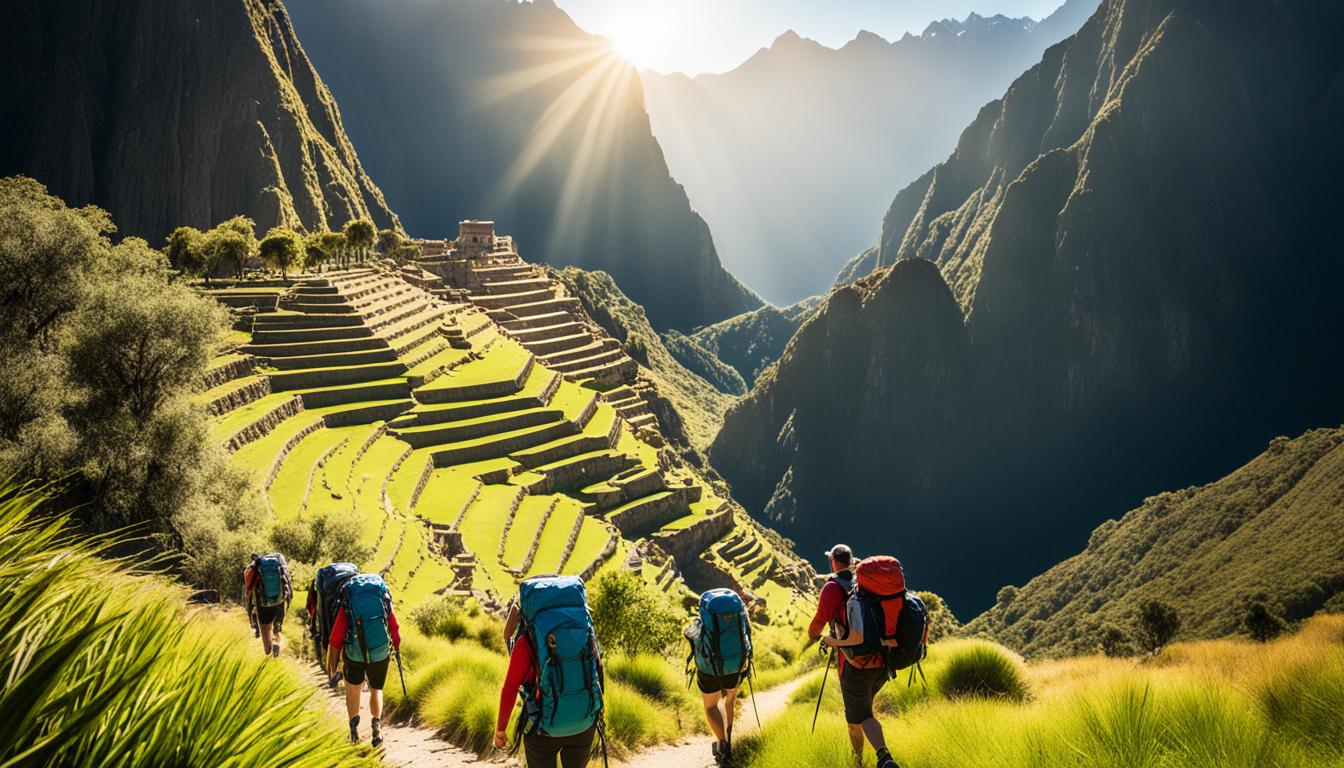
Starting the Inca Trail adventure, you’ll see stunning Andean landscapes. You’ll pass through snow-capped peaks, lush cloud forests, and peaceful alpine meadows. These views show the timeless beauty of the Andes.
The Inca Trail is full of Inca ruins and archaeological sites. These places let you connect with the Inca’s history and culture. They make you feel like you’re stepping back in time.
Breathtaking Andean Landscapes
- Majestic snow-capped peaks that pierce the sky
- Lush, verdant cloud forests teeming with diverse flora and fauna
- Serene alpine meadows blanketed in vibrant wildflowers
- Cascading waterfalls and crystal-clear streams that quench your thirst
Inca Ruins and Archaeological Sites
- The awe-inspiring Machu Picchu, the crowning jewel of the Inca Empire
- Intricately carved stone structures and terraces that showcase Inca engineering prowess
- Ancient ceremonial sites and sacred spaces that offer insights into Inca spirituality
- Mysterious and enigmatic ruins that leave you pondering the mysteries of the past
| Inca Ruin | Significance | Key Highlights |
|---|---|---|
| Machu Picchu | The crown jewel of the Inca Empire, a UNESCO World Heritage Site | Impeccably preserved stone structures, sweeping views of the Andes, and a sense of timeless wonder |
| Winay Wayna | A stunning Inca ruin perched on a mountainside, overlooking the Urubamba River | Beautifully terraced agricultural areas, ceremonial structures, and a tranquil atmosphere |
| Runkurakay | A well-preserved Inca ruin that served as a vital rest stop and communication outpost | Intriguing architectural features, stunning vistas, and a glimpse into the Inca’s strategic planning |
Challenges and Considerations
Trekking the Inca Trail in 2025 comes with big challenges, mainly because of the high altitude. Hikers might get altitude sickness, which includes headaches, feeling very tired, and having trouble breathing. It’s key to get used to the altitude, drink plenty of water, and walk at a good pace to avoid these problems and have a great trekking time.
Altitude Sickness and High-Altitude Trekking
The Inca Trail goes through mountains, reaching up to 4,200 meters (13,800 feet) high. This big change in altitude can cause altitude sickness, a serious issue for some hikers. Symptoms include:
- Headaches
- Nausea and vomiting
- Dizziness and fatigue
- Difficulty sleeping
- Shortness of breath
To lower the risk of altitude sickness, it’s important to get used to the altitude before starting the Inca Trail trek. This might mean spending a few days at a lower place to let your body adjust. Drinking enough water, walking slowly, and knowing the signs of altitude sickness are also key steps.

The Inca Trail also has other challenges, like steep climbs, rough terrain, and long walks. Being well-prepared, both in fitness and gear, is crucial for a successful and fun trekking trip.
“The Inca Trail is a once-in-a-lifetime adventure, but it’s important to be prepared for the physical and environmental challenges it presents.”
Knowing the challenges and taking steps to prepare helps trekkers beat the Inca Trail and see the amazing ruins of Machu Picchu. This makes the journey even more special.
Choosing the Right Tour Operator
Finding a good tour operator is key for your Inca Trail trip in 2025. Choose tour operators that focus on responsible and sustainable travel. They should help protect the trail and support local communities. Good Inca Trail tours offer help with permits, logistics, and expert guides.
Reputable Inca Trail Tour Companies
Look for Inca Trail tour companies with a solid history of quality tours. They should have skilled guides, good gear, and aim to reduce their environmental impact.
- Adventure Life
- Mountain Lodges of Peru
- Llama Path
- Peru Treks
- Inca Trail Reservations
Responsible and Sustainable Travel
Choose tour operators that focus on responsible and sustainable tourism. These companies should protect the Inca Trail and support local communities. They should also take care of their employees.
| Sustainable Practices | Community Support |
|---|---|
| Proper waste management | Hiring local guides and porters |
| Use of renewable energy | Investing in community projects |
| Minimizing carbon footprint | Fair labor practices |
By picking a reputable and responsible Inca Trail tour operator, you make sure your trip is unforgettable. You also help protect the trail and support local communities.
Embracing the Inca Trail Experience
The inca trail trek is more than a physical challenge. It’s a journey that lets you dive into Andean traditions and connect with the Inca heritage. As you walk through the Andean landscapes, you’ll learn about the indigenous cultures that live here.
One great part of hiking the inca trail is meeting local communities. You can learn about their customs and beliefs. You might visit traditional villages, join in ceremonies, and see the craft traditions that have lasted for generations.
“The inca trail is not just a hike, it’s a journey of discovery. Every step you take is a chance to connect with the land, the people, and the history that has shaped this extraordinary region.” – Marisol Gutierrez, Andean cultural expert
Immerse yourself in andean culture and think about the inca trail‘s importance. From Machu Picchu’s ruins to sacred sites, the inca trail shows the Inca people’s ingenuity and resilience.
Connecting with the Land and its People
- Interact with local communities and learn about their traditions
- Participate in ceremonial rituals and cultural experiences
- Discover the vibrant textile and craft traditions of the Andes
Exploring the Inca Legacy
- Visit the renowned ruins of Machu Picchu
- Discover the significance of sacred Inca sites along the trail
- Gain a deeper understanding of Inca history and its lasting impact
By embracing the inca trail, you challenge yourself and start a journey that connects you to the land and people. It’s a journey that rewards you with unforgettable cultural experiences. Whether you’re experienced or new to hiking, the inca trail is an experience you won’t forget.
Inca Trail Alternatives
The Inca Trail is famous, but it’s not the only way to get to Machu Picchu. In 2025, Peru has many other treks that let you see beautiful landscapes and learn about Inca history. These treks are perfect for those who want to see more of what Peru has to offer.
Salkantay Trek: An Awe-Inspiring Alternative
The Salkantay Trek is a great choice instead of the Inca Trail. It’s tough but beautiful, taking you through the Andes. You’ll see the huge Salkantay mountain, beautiful lakes, and small Quechua villages. It’s less crowded than the Inca Trail, so you can really feel like you’re exploring on your own.
Other Exciting Treks in Peru
- Lares Trek: This trek is quieter and lets you see how the Andean people live. You can talk to locals and visit old Inca places.
- Choquequirao Trek: Called the “second Machu Picchu,” this trek is tough but rewarding. It takes you to the big Inca ruins of Choquequirao.
- Ausangate Trek: Known for its beautiful glaciers and hot springs, the Ausangate Trek is great for those who want to see something different.
These treks in Peru let you see amazing nature, culture, and Inca ruins with fewer people around. Choosing the Salkantay Trek or another trek means making memories that will stay with you forever.
“The journey is the destination, and the Inca Trail alternatives in Peru offer a chance to truly savor the adventure.”
Machu Picchu: The Crowning Glory
After trekking the Inca Trail, you’ll reach Machu Picchu in 2025. This UNESCO World Heritage site is a gem of the Inca Empire. It lets visitors dive into ancient Peru’s history and culture.
Exploring the Inca Citadel
Machu Picchu is a wonder with its detailed stone buildings, gardens, and temples. Walking through, you’ll see the Incas’ skill and their love for nature. The site tells stories of the Machu Picchu and Inca ruins at every turn.
For a full experience, consider a guided tour or a sunrise hike. These let you see the Andes light up as the sun rises over the Inca citadel. Enjoy the views of Cusco and the Inca Trail that led you here.
“Machu Picchu is the most remarkable masterpiece of architecture and engineering in all of ancient America.” – Hiram Bingham, the American historian who rediscovered the lost Inca city in 1911.
Exploring Machu Picchu’s paths and stonework deepens your understanding of the Inca civilization. This experience will be the highlight of your Inca Trail journey.
Conclusion
As we end this guide, it’s clear the Inca Trail in 2025 will be an amazing journey. You’ll see stunning Andean landscapes and explore Inca ruins. This trip through Peru lets you connect with the area’s rich culture and nature.
If you love hiking or want to learn about the Inca traditions, this guide has what you need. We’ve shared tips on getting permits and handling the trek’s challenges. This ensures a smooth and memorable trip.
Getting ready for this trekking and adventure travel journey? Embrace the spirit of exploration and cultural immersion. With good planning and an open mind, you’ll make unforgettable memories. You’ll also gain a deeper respect for the Inca people’s legacy.
FAQ
What is the Inca Trail?
The Inca Trail is a famous hiking path in the Andes Mountains of Peru. It leads to Machu Picchu, the legendary Inca citadel. The Inca Empire built it for pilgrims and traders.
When is the best time to hike the Inca Trail?
The best time to hike is from May to September. This is when the weather is best.
How do I obtain permits and reservations for the Inca Trail?
You need to get permits and reservations early. This is because there’s a limit to protect the trail.
What kind of physical preparation is required for the Inca Trail?
You should train to build endurance and strength. Also, get used to the high altitude to enjoy the trek.
What are the highlights of the Inca Trail?
The trail offers stunning Andean views, including snow peaks, lush forests, and meadows. You’ll also see Inca ruins and archaeological sites.
How can I prepare for the challenges of high-altitude trekking on the Inca Trail?
To avoid altitude sickness, acclimatize, stay hydrated, and pace yourself. This will make your journey safe and fun.
How do I choose the right tour operator for my Inca Trail adventure?
Choose a reputable tour operator. They should focus on responsible and sustainable practices. This helps protect the trail and its communities.
What are some alternatives to the Inca Trail?
If you want to avoid the crowds, consider trails like the Salkantay Trek. They offer unique views and experiences.
What can I expect when exploring Machu Picchu?
After the Inca Trail, you’ll see Machu Picchu, the Inca Empire’s treasure. Explore the ancient site, admire its architecture, and dive into its history and culture.
